Updated on
Food and drink in Morocco
What you eat in Morocco, what is safe to try on the street, the facts on tap water and alcohol, and tips for vegetarians and for Ramadan.
In short
- Tagine, couscous, harira and pastilla are the classics; couscous is traditionally eaten on Friday.
- Street food is safe when it is cooked fresh and hot and plenty of Moroccans are eating there.
- Don't drink tap water; bottled water is cheap and sold everywhere.
- Alcohol is available in licensed restaurants and hotels, not in the medina.
- Eating vegetarian is easy; vegan takes a bit more explaining.
In Morocco you mostly eat tagine, couscous, harira and a lot of bread, with mint tea on the side. Street food is safe to eat when it is cooked fresh and hot. Don't drink the tap water. Food is also how people welcome you: a meal easily takes two hours, and Moroccan women talk about their cooking with pride.
The classics
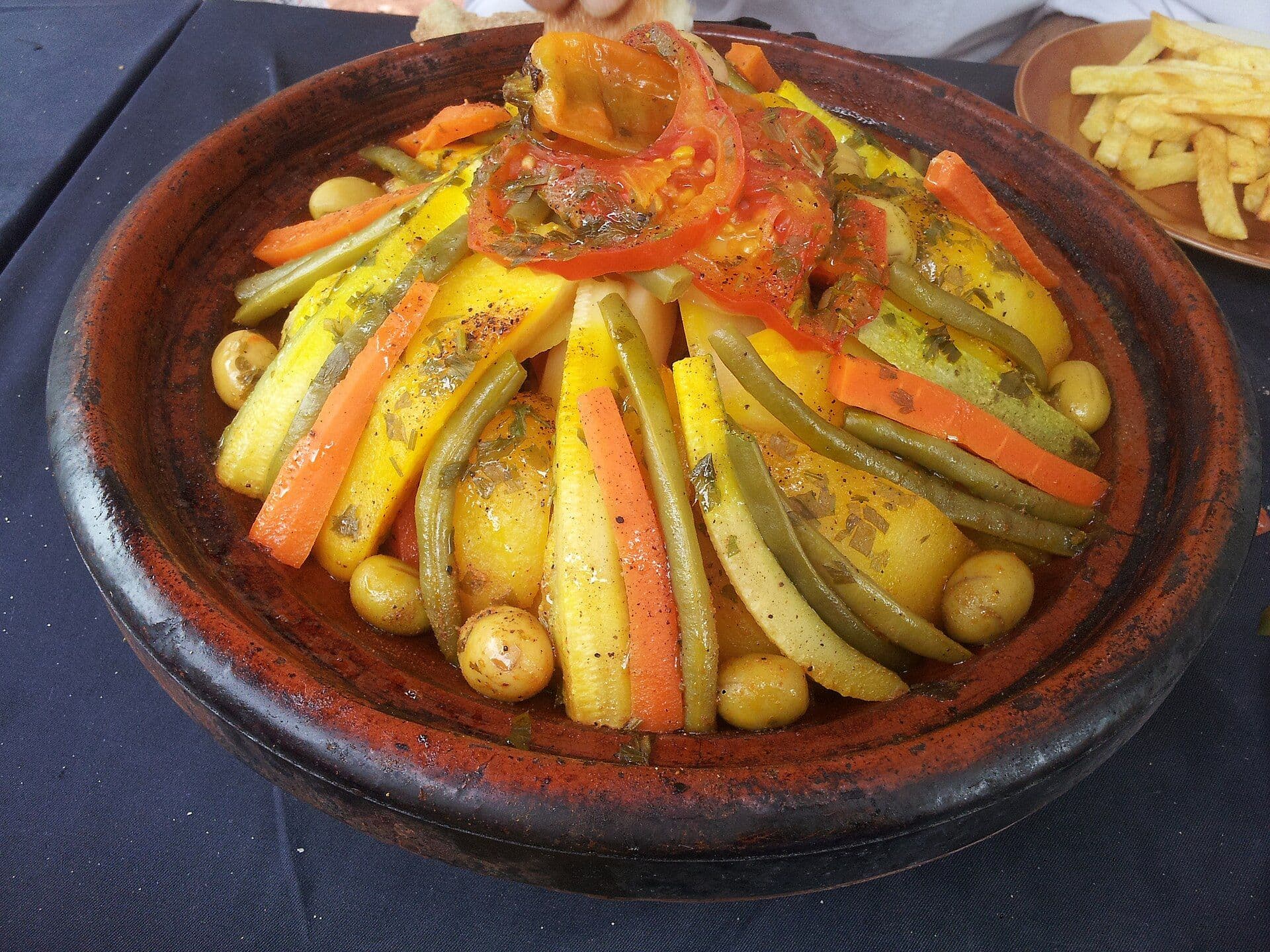
- Tagine: a stew cooked in an earthenware dish with a cone-shaped lid. With chicken and lemon, with lamb and prunes, with fish or with vegetables only. Every region and every family has its own version.
- Couscous: traditionally on Friday, the day of communal prayer and the family meal. Often with seven vegetables and meat, sometimes sweet with onions and raisins (tfaya).
- Harira: tomato soup with lentils, chickpeas and herbs. During Ramadan it is the soup that breaks the fast, but you can get it all year.
- Pastilla: a flaky pastry pie with chicken or pigeon, almonds and cinnamon, dusted with powdered sugar. Sweet and savory at once.
- Bread: khobz, the round loaf that is served with everything and that you use as cutlery.
- Msemen and baghrir: pancakes for breakfast, with honey and amlou (almond paste with argan oil).
- Mint tea: green tea with fresh mint and a lot of sugar. Say "shwiya sukkar" if you want less sugar.
Street food
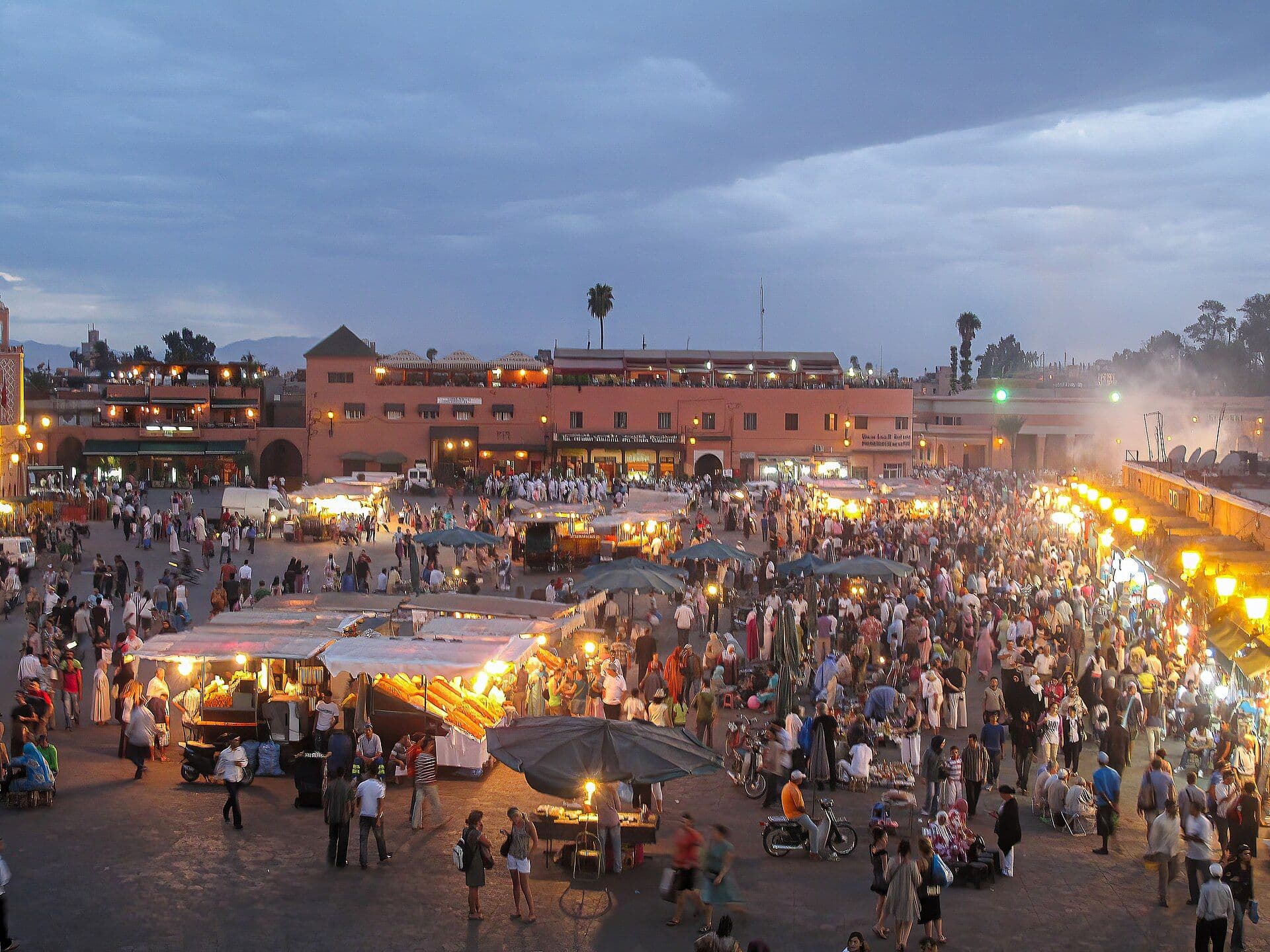
On Jemaa el-Fna in Marrakesh the square turns into an open-air restaurant every evening, with grill stalls, snail soup, fresh juice and dried fruit. It is worth eating there once. Do stick to a few rules:
- Go where it is busy with Moroccans. Where a lot is sold, the food is fresh.
- Choose food that is cooked hot in front of you: grilled meat, fried fish, skewers.
- Skip raw salads, unpeeled fruit and food that has been sitting out.
- Fresh juice is fine. Check that the glass is clean or ask for a disposable cup.
- Agree on the price before you order. Some stalls charge for "extras" you didn't ask for.
Stomach trouble does happen. Tiredness, heat and a lot of new food at once play a part, so it is not always down to one bad stall. Bring oral rehydration salts and something for diarrhea; see the packing list.
Water
Tap water in the cities is chlorinated, but your gut is not used to it. Drink bottled water; a 1.5-liter bottle costs about 5 to 10 dirham. Restaurants almost always serve bottled water too. In good restaurants and hotels, ice cubes are made from filtered water. If you are not sure, ask.
Alcohol
Morocco is a Muslim country, but alcohol is available. You find it in licensed restaurants, bars and hotels, mainly in the new town of Gueliz and in riads and hotels with a bar, and in some larger supermarkets. In the medina of Marrakesh and in smaller villages there is next to nothing. Don't drink in public and keep it modest. Moroccan wine from the area around Meknes is surprisingly good, by the way.
Vegetarian and vegan
Eating vegetarian is easy. There is vegetable tagine, couscous with vegetables, lentil soup, beans (loubia), grilled eggplant (zaalouk), salads of bell pepper and tomato (taktouka) and bread with olives. Do say that you want no meat and no meat stock, because "vegetarian" is sometimes understood as "not much meat". Vegan is harder because of the butter and eggs in many dishes, but with some explaining it works. At the cooking workshop in Marrakesh you see exactly what goes into the dishes.
Ramadan
During Ramadan, Moroccans don't eat or drink during the day. As a tourist you can eat, but out of respect, don't do it conspicuously on the street. Many restaurants in tourist areas stay open, often behind a curtain. After sunset comes iftar, the meal that breaks the fast. If you are invited, go. There is more in the guide on Ramadan.
Table manners
- Wash your hands before eating; often a jug of water and a basin are passed around.
- Eat with your right hand if you eat with your hands. The left hand is considered unclean.
- From a shared tagine you eat the part in front of you, not the middle.
- "Bismillah" before the meal and "Hamdullah" after it are appreciated, also from a guest.
- You can decline a second and third helping, but do it kindly. Hospitality is taken seriously.
What to taste
A list to tick off: tagine with chicken and preserved lemon, harira with dates, msemen at breakfast, grilled sardines on the coast in Essaouira, almond cookies with tea, fresh orange juice on Jemaa el-Fna, and a fried egg with khlii (dried meat) if you dare.
Soukayna knows where the locals eat. Ask her on one of the trips, because that is usually better than what is on the first page of a review site.
Frequently asked questions
Can I eat street food in Morocco?
Yes. Choose stalls that are busy with locals and where the food is cooked in front of you. Avoid food that has been sitting for hours and salads washed in tap water.
Can I drink the tap water?
Better not. In the cities it is chlorinated, but your gut is not used to it. Use bottled water, also for brushing your teeth if you are sensitive.
Is alcohol available in Morocco?
Yes, in licensed restaurants, bars and hotels and in some larger supermarkets. In the medina of Marrakesh almost nowhere serves alcohol. Don't drink on the street.
Can I eat well as a vegetarian in Morocco?
Yes. Vegetable tagine, couscous with seven vegetables, lentils, beans, bread with olives and amlou are everywhere. Mention that you don't want meat stock either.
From the blog
What does a trip to Morocco cost? An honest overview
Roughly what you pay in Morocco for flights, riads, food, taxis, tickets, hammam and tips, and what sets the price of a tailor-made trip with a driver.
Exploring Marrakesh as a solo female traveler: tips and tricks
How to prepare for Marrakesh as a woman on your own: where to sleep, what to wear, metered taxis, pushy vendors and where to eat at ease.
Rather have someone arrange it for you?
When you travel with Soukayna, she takes care of the driving, the stops and the local guides. Ask for a proposal in the chat.
You chat with Soukayna (English, French, Moroccan Arabic) or Bas (Dutch).