Updated on
Traveling in Morocco during Ramadan
What changes in Morocco during Ramadan, what stays open, how to behave as a non-Muslim and why it can be a special time to travel.
In short
- During Ramadan Muslims fast from sunrise to sunset; the rhythm of the day shifts to the evening.
- Hotels, riads, sights and most tourist restaurants stay open.
- Don't eat, drink or smoke conspicuously in public during the day.
- After sunset iftar begins, and the streets stay full and festive until late at night.
- In 2027 Ramadan falls roughly from early February to early March; it moves forward about eleven days every year.
You can travel around Morocco well during Ramadan. Hotels, riads, sights and most tourist restaurants stay open. What changes is the rhythm of the day: quiet during the daytime and busy after sunset. Ramadan is the ninth month of the Islamic calendar, in which Muslims don't eat, drink or smoke from sunrise to sunset. In Morocco almost the whole country takes part.
When
The Islamic calendar follows the moon and is about eleven days shorter than the Gregorian calendar. So Ramadan starts about eleven days earlier every year. In 2027 the fasting month falls roughly from early February to early March. The exact start date is only set one or two days beforehand, once the new moon has been sighted. The end is celebrated with Eid al-Fitr. The country then largely comes to a standstill for two to three days.
During Ramadan Morocco temporarily sets the clock back one hour, so the fast ends earlier. Your phone usually adjusts automatically, but double-check for flights and appointments.
What changes
During the day the country is quieter than usual. Shops open later, many small eateries are closed and the cafés are empty. People who are fasting are tired in the late afternoon and sometimes short-tempered; it is not meant personally. Working hours are shorter and many offices and banks close early. About an hour before sunset the streets get busy. Everyone hurries home, traffic is chaotic and taxis are hard to get.
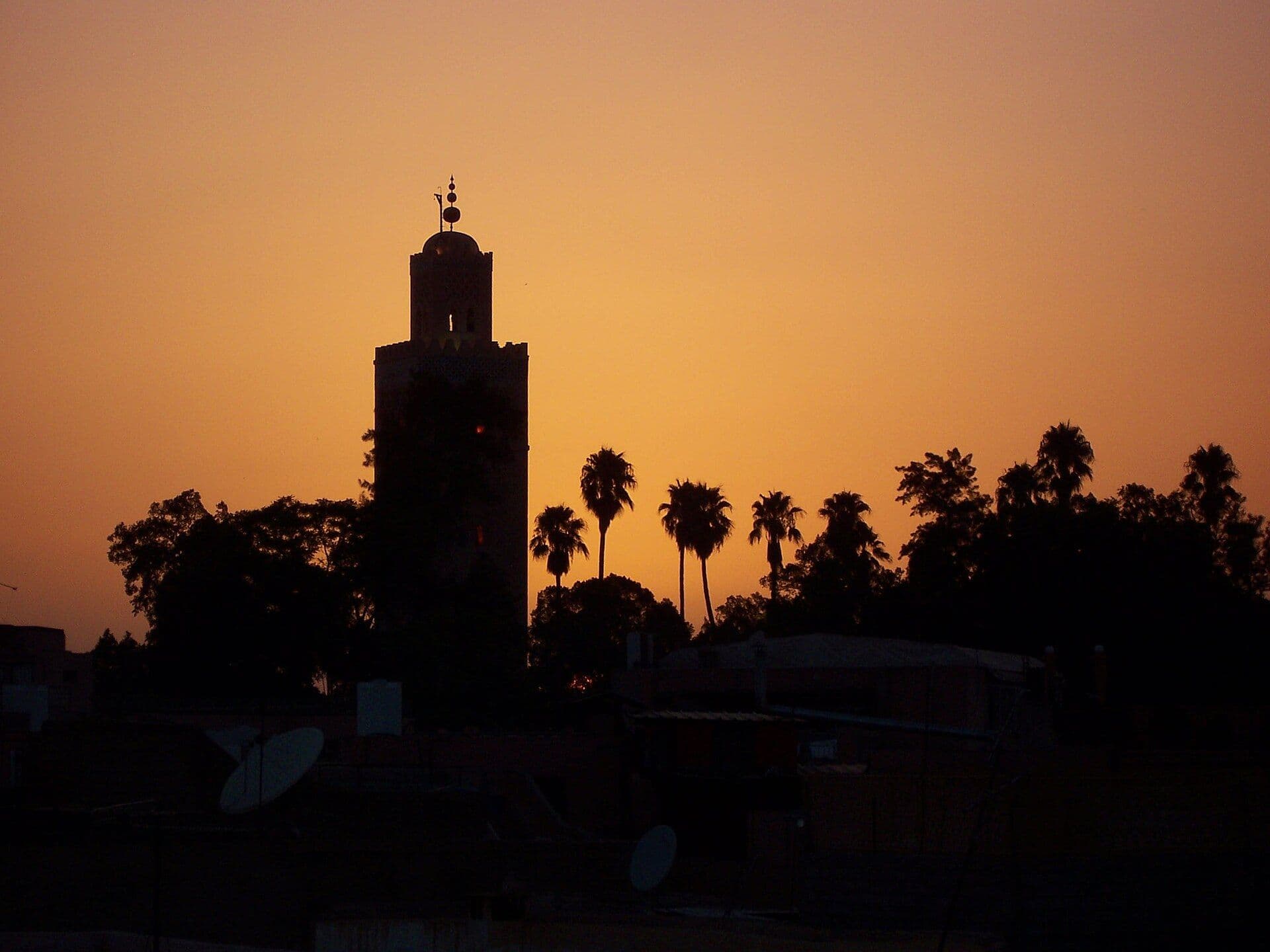
At the evening prayer everything goes completely silent, because everyone is at the table for iftar, the meal that breaks the fast. An hour later the streets fill up. Families go for a walk, the cafés are packed, the souks open again and the medina of Marrakesh keeps moving until after midnight. Just before sunrise comes suhoor, the last meal, and then it starts all over again.
What stays open
- Hotels and riads: open as usual, with breakfast and usually an adjusted evening program.
- Sights: palaces, gardens, museums and madrasas are open, sometimes with shorter hours.
- Restaurants in tourist areas: many stay open during the day, sometimes behind a curtain or with the door closed. In Gueliz, in riads and in hotels you can always eat.
- Supermarkets: open, often with adjusted hours.
- Transport: everything runs, but count on delays around sunset.
- Bars and alcohol: many bars close for the whole month; licensed hotels often still serve their guests.
Closed or different: many small local eateries during the day, and the hammam at certain hours. During the days of Eid al-Fitr almost the whole country is closed.
How to behave
As a non-Muslim you are not required to fast and nobody expects it of you. Discretion is appreciated, though:
- Don't eat, drink or smoke conspicuously in public during the day. Everyone understands a sip of water from your bottle in the heat; a sandwich on a bench on Jemaa el-Fna is not a good idea.
- Dress a little more covered than usual. The month is religiously charged and people pay more attention to appearance. See also what to wear.
- Be patient. People who haven't eaten, had a drink or had coffee since sunrise are not at their best in the afternoon.
- Plan sights in the morning, rest in the afternoon and go out into the streets after sunset.
- Wish people "Ramadan mubarak" or "Ramadan kareem". You get a smile in return.
Iftar
Try to join an iftar at least once during Ramadan. The meal starts with dates and milk or water. Then comes harira (the tomato and lentil soup), followed by chebakia (honey cookies with sesame), msemen, eggs, bread and later a larger dish. Many restaurants have an iftar menu. If you are invited to someone's home, that is a great honor: bring pastries or dates and don't say no. Staying overnight with a family, which Saïd can arrange on our trips, is extra special in this month.
Why it can be a good time
It is quieter during Ramadan. There are fewer tourists, and outside school holidays flights and riads are cheaper. The atmosphere is different from any other month. At sunset it goes silent, cannon shots or sirens announce the end of the fast, and in the evening the streets are one big family celebration. You see a lot of daily life in Morocco then.
The weather in February and March is pleasant too: sunny, 18 to 24 °C (64 to 75 °F) in Marrakesh, with cool evenings. The guide on the best time to visit gives the weather per month.
Why it can be less convenient
If you want long lunches on terraces during the day, drinks at the bar and a tight schedule, Ramadan is not your month. On a desert trip you also need to keep in mind that the camp staff are fasting and need rest in the late afternoon. It can all be done, but the pace is different.
Traveling with Soukayna during Ramadan
Soukayna drives during the fasting month too. We plan the days differently then: an early start, a quiet afternoon and arriving at the destination on time, so that she and the people we visit along the way can make their iftar. Sometimes you are invited to join them.
Frequently asked questions
Can I travel as a tourist during Ramadan?
Yes. Hotels, riads, monuments and most tourist restaurants are open. The rhythm of the day is different and some people are tired during the day, but the evenings are special.
Can I eat and drink on the street during the day?
It is not forbidden for non-Muslims, but it is respectful to be discreet: in a restaurant, in your riad or just out of sight. Everyone understands drinking water in the heat.
When is Ramadan in 2027?
Roughly from early February to early March 2027. The exact dates depend on the moon and are set shortly beforehand. Every year Ramadan starts about eleven days earlier than the year before.
Does Soukayna drive during Ramadan?
Yes. We adapt the program to the rhythm of the day. The morning has a different pace and we keep the late afternoon quiet, so everyone is on time for iftar.
From the blog
Your period on the road in Morocco: what to know
Getting your period while traveling in Morocco: where to buy pads and tampons, what toilets on the road are like, and what to do in the desert and hammam.
Why a female driver in Morocco makes a difference
What changes when your driver in Morocco is a woman: a more relaxed trip, places men can't enter, and the things that stay exactly the same.
Rather have someone arrange it for you?
When you travel with Soukayna, she takes care of the driving, the stops and the local guides. Ask for a proposal in the chat.
You chat with Soukayna (English, French, Moroccan Arabic) or Bas (Dutch).