South, beyond the Atlas
Aït Benhaddou and Ouarzazate
Over the Tizi n'Tichka pass to the mud-brick ksar of Aït Benhaddou and to Ouarzazate with its kasbah and film studios. Travel time, season and sights.
- Region
- South, beyond the Atlas
- From Marrakesh
- Aït Benhaddou about 4 hours, Ouarzazate about 4.5 hours by car from Marrakesh over the Tizi n'Tichka pass
- Best time
- March through May and October through November; summers above 40°C, winters cold but clear
Do not miss
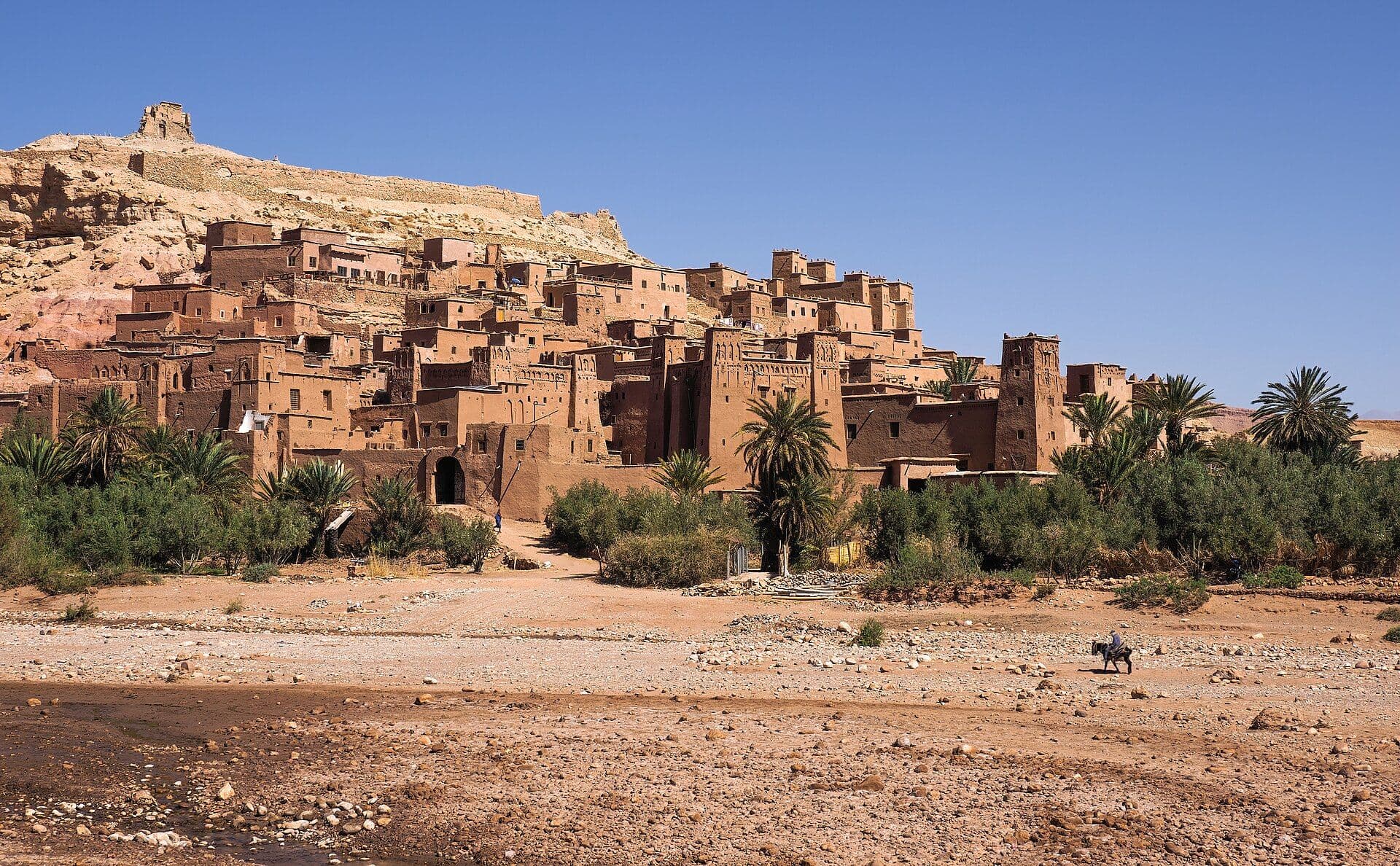
- The ksar of Aït Benhaddou, a UNESCO site and the backdrop of many films
- The drive over the Tizi n'Tichka pass at 2,260 meters
- Kasbah Taourirt in Ouarzazate
- Film studios where Gladiator and Game of Thrones were shot
- Sunset from a rooftop terrace facing the ksar
- The first leg on the way to the Sahara
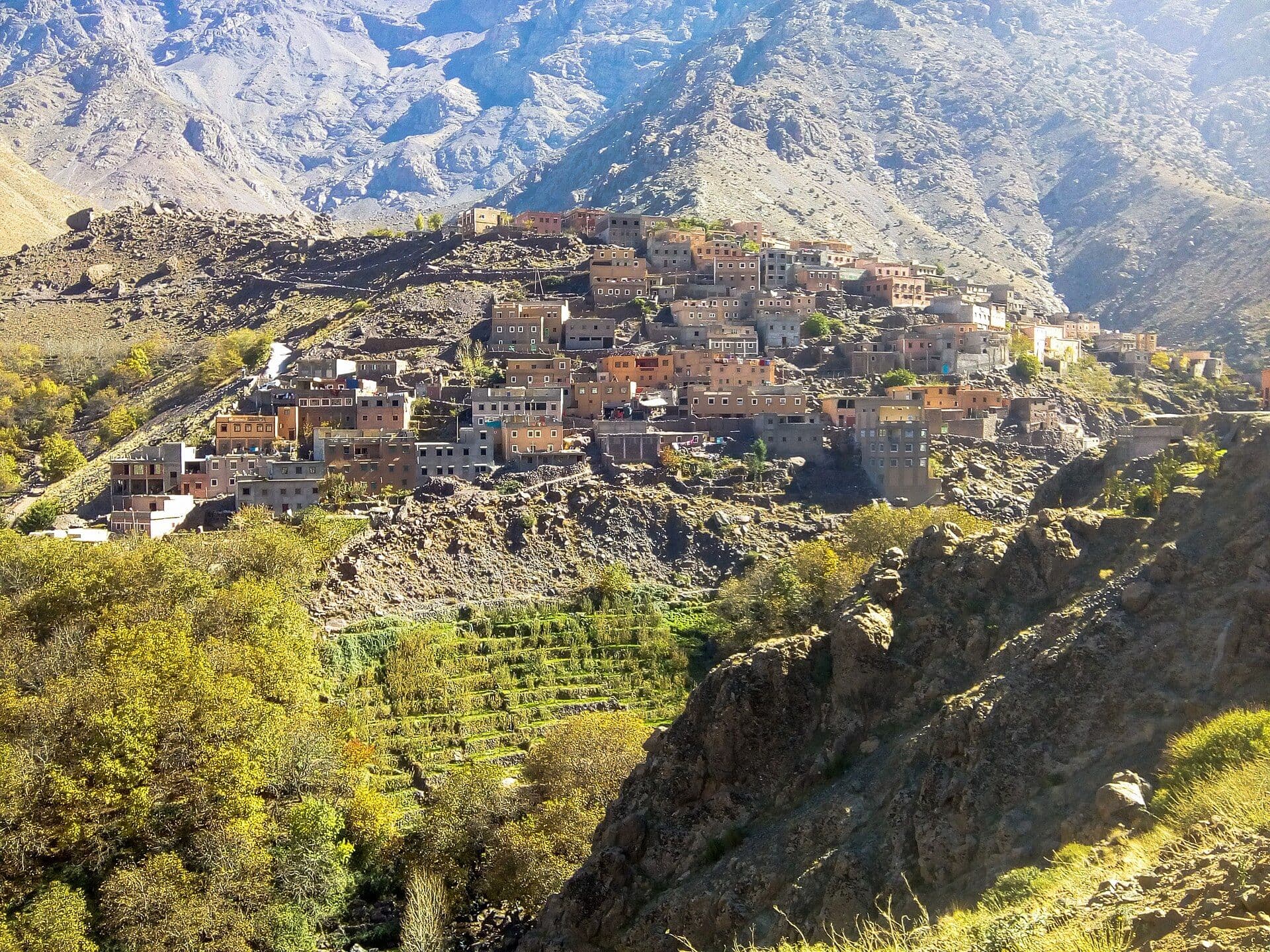
Beyond the Atlas Mountains, Morocco is drier and emptier, with villages of red earth in exactly the color of the landscape. Aït Benhaddou is the best known: a fortified village (ksar) on a hill beside a river, which you know from Gladiator, Lawrence of Arabia and Game of Thrones. Ouarzazate, half an hour farther on, is the town with the kasbah and the film studios. Together they make up the first day of a trip from Marrakesh to the Sahara. Even if you are not going to the desert, they are worth the drive over the pass.
The drive there
You climb through the High Atlas for two hours to the Tizi n'Tichka pass at 2,260 meters, past villages, terraces and slopes that get barer as you go. Along the way you stop at a viewpoint and drink tea at a women's cooperative or in a village. On the south side the road descends into a landscape that looks more like Arizona than the medina you left that morning. About four hours after setting off you are standing at the ksar.
The ksar and the town
You see Aït Benhaddou on foot. You cross the river, which is usually dry, climb through the alleys between the earthen houses, and after half an hour you are at the granary on top, with a view over the palms and the plain. Go early or late, because between eleven and three it is hot and crowded with day-trippers. A few families still live in the ksar, and they sometimes show visitors their home.
You stay the night in the new village across the river. Several guesthouses there have a rooftop terrace that looks straight at the ksar. The sunset from one of those terraces is the reason to stay over.
Ouarzazate is a practical town. Kasbah Taourirt in the center is one of the best-preserved kasbahs in the south, with painted ceilings and a maze of rooms. Atlas Studios and CLA Studios on the edge of town are open-air museums of film sets: an Egyptian temple, a Tibetan monastery, a piece of Jerusalem. It is a little kitschy, and entertaining if you like movies.
If you have an extra day, drive on to the Draa Valley with its endless palm groves, or to the Valley of the Roses near Kelaat M'Gouna, where the rose harvest is in May.
As a woman in the south
The south is rural and quiet. In Aït Benhaddou and Ouarzazate hardly anyone approaches you. Only at the ksar do vendors offer you a "guide," and a friendly no thanks is enough. Covered clothing is the norm here, especially in the villages: long pants or a skirt and covered shoulders. It is dry and the sun is fierce, so a scarf around your head is also simply practical. The guide on what to wear has more tips.
The guesthouses are family businesses where a woman on her own is nothing unusual and you are welcome. There is little to do in the evening. You eat on the terrace and watch the ksar in the last light.
Travel time, overnight stays and season
Aït Benhaddou is about a four-hour drive and Ouarzazate four and a half hours, without stops. With stops it takes up a whole day. One overnight stay is ideal, even if you go back to Marrakesh afterward. If you continue to the Sahara, you sleep here anyway.
The best months are March through May and October through November. In summer it gets hotter here than in Marrakesh. In winter the days are clear and crisp, and the pass can be closed for a few hours after snowfall.
Bring good shoes for the climb through the ksar, a scarf, sunscreen and cash. There are ATMs in Ouarzazate, not in Aït Benhaddou. What a long drive like this looks like is covered in getting around.
Two days with Soukayna
On the two-day trip to Aït Benhaddou and Ouarzazate Soukayna drives you over the pass, with stops wherever you like, and you sleep across from the ksar. The next day you see Taourirt and the studios and drive back. You can also continue to the desert on the three-day Sahara trip. A night in the Atlas Mountains on the way there or back splits the drive over the pass in two.
Questions about Aït Benhaddou and Ouarzazate
Can I do Aït Benhaddou as a day trip from Marrakesh?
You can, but you will spend eight to nine hours in the car in a single day. We recommend staying the night. Then you see the ksar at sunset and sunrise, when the buses are gone.
Is the mountain pass scary?
The Tizi n'Tichka is a good paved road with curves and views, not a mountain track. Soukayna drives it regularly. When it snows the pass can be closed for a few hours; then we wait or adjust the day.
How much of Aït Benhaddou is still authentic?
A handful of families still live in the ksar and UNESCO supports its upkeep. Parts have been restored, some of them for films. It remains an inhabited village of earth, and nothing about the view from the top is fake.
Is Ouarzazate a beautiful city?
No, it is a practical town with a beautiful kasbah and film studios. You go there for Taourirt, for the studios and to spend the night on the way to the desert or the Draa Valley. The town itself is no reason to come.
Trips to Aït Benhaddou and Ouarzazate
From the blog
Other destinations
Shall we plan your trip together?
Send a message with when you want to go, who you are traveling with and what appeals to you. You get a proposal back and you are not committed to anything.
You chat with Soukayna (English, French, Moroccan Arabic) or Bas (Dutch).